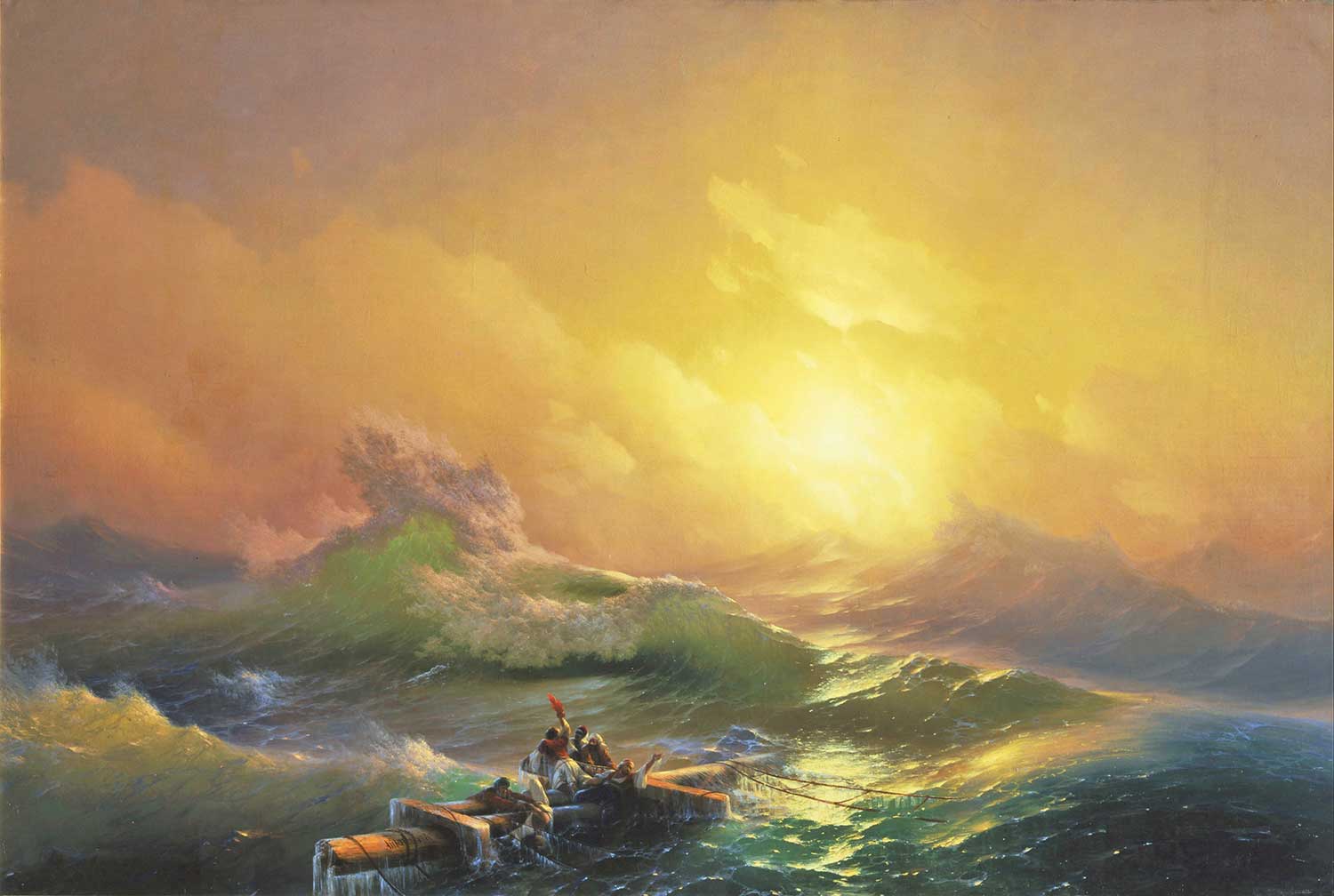
The Ninth Wave by Ivan Aivazovsky was created in 1850 and is in State Russian Museum, St. Petersburg. The size of the work is 221 x 332 cm and is made of oil on canvas.
About the Work
The Ninth Wave is probably Aivazovsky’s most famous and popular work. Originally acquired for the Imperial Hermitage, it was one of the first paintings in the collection of the Emperor Alexander III Russian Museum in 1897. The ninth wave — in popular legend, the most terrible, powerful and destructive wave — is fast approaching. Yet the darkness of the night is broken by the light of hope. A small group of people cling to the wreckage of the ship’s mast, which seems a more reliable refuge at dawn than it did in the darkness of the night. The desperate attempts to survive will conquer the stormy sea. The Ninth Wave was, of course, also interpreted allegorically. The painting acquired symbolic meaning for many generations, instilling faith in the victory of man, humanity and life.
It depicts a sea after a night storm and people facing death attempting to save themselves by clinging to debris from a wrecked ship. The debris, in the shape of the cross, appears to be a Christian metaphor for salvation from the earthly sin. The title refers to a traditional nautical belief that the ninth wave is the last, largest and most deadly wave in a series, at which point the cycle begins again. This painting shows both the destructiveness and beauty of nature.
Buy this Work as Fine Art Print on Canvas