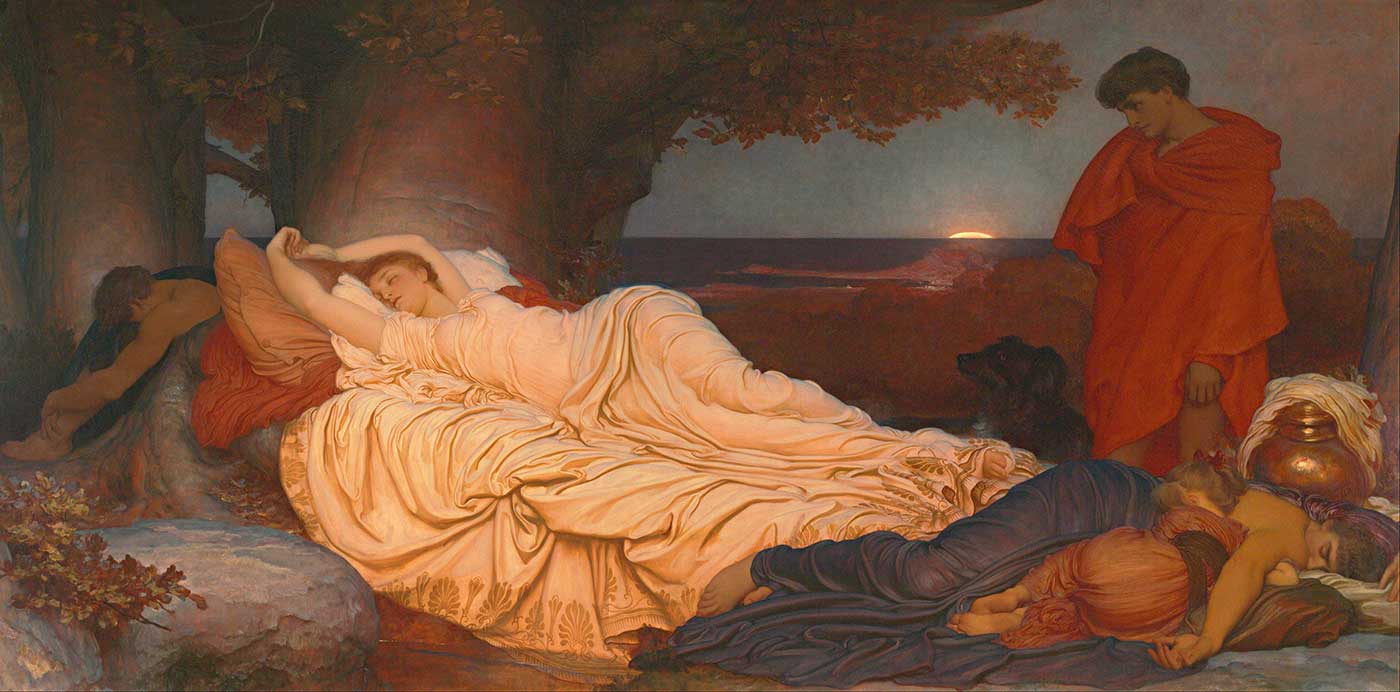
Cymon and Iphigenia by Frederic Leighton was created in 1884 and is in Art Gallery of New South Wales. The size of the work is 163 x 328 cm and is made of oil on canvas.
About the Artwork
The first of many major paintings he exhibited at the Royal Academy was purchased by Queen Victoria herself – an unbeatable beginning to a lifetime of official reward and international recognition. Leighton’s taste, like that of his audience, was for ceremonial arrangements of beautifully draped figures in classical surroundings. The contemporary realities of industrial England made no appearance in his work, which is unashamedly nostalgic and idealising.
The languorous splendour of ‘Cymon and Iphigenia’ – the tale of a raw youth brought to moral excellence by the revelation of feminine beauty – perfectly expresses the technical finesse and intense eroticism of Leighton’s style. Iphigenia’s extraordinary undulations betray a sensuous sensibility quite as much as the artist’s obligatory scrutiny of classical statuary. The direct source of the narrative is Boccaccio’s ‘Decameron’, in which the well-born and handsome young Galesus was renamed Cymon – meaning beast – on account of his brutishness. On a mild afternoon in May, Cymon chanced upon the sleeping Iphigenia, sensing at once that she was ‘the loveliest object that any mortal being had ever seen’. Falling instantly in love, he became a lifelong devotee of beauty and philosophy.